






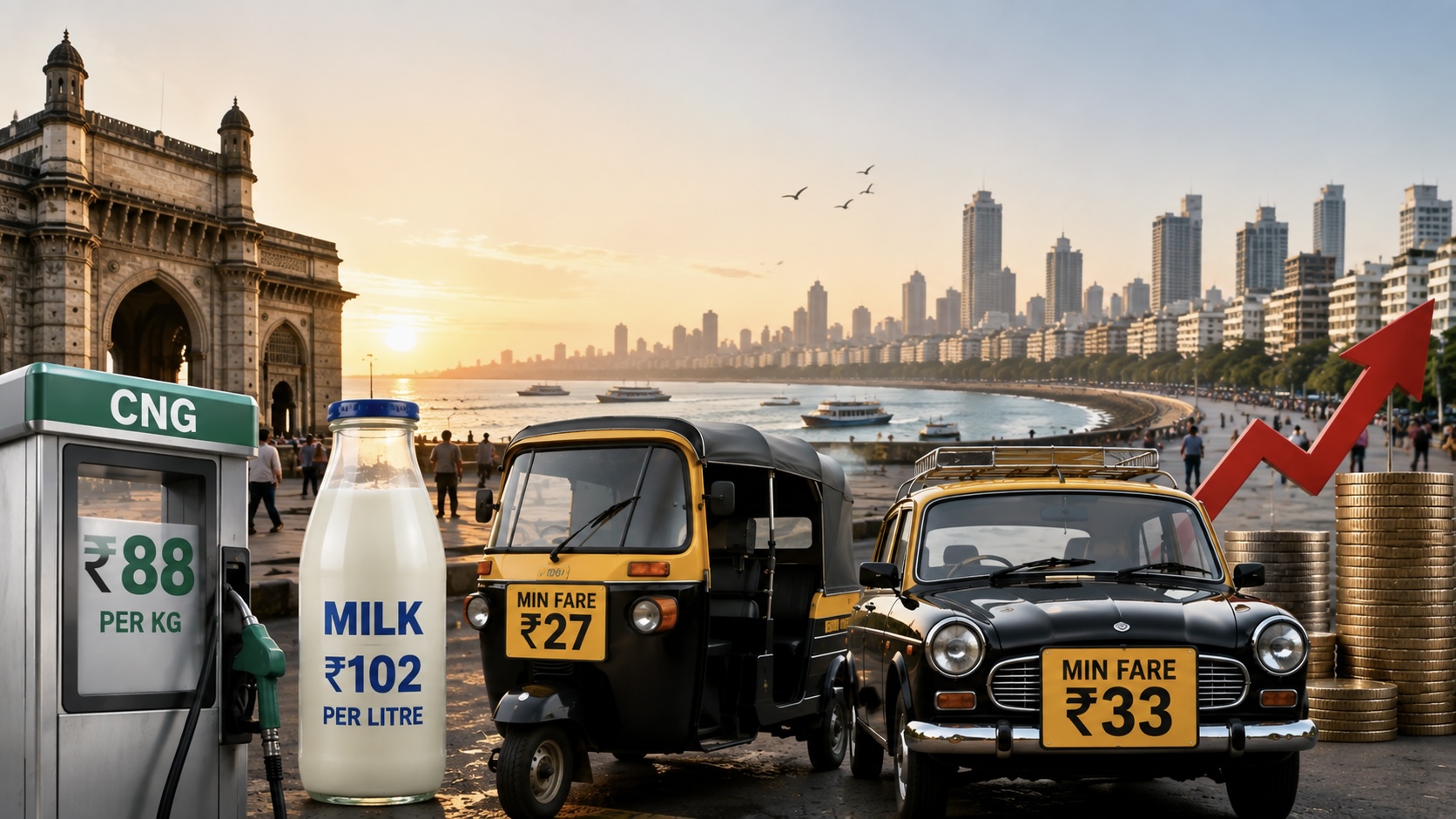
September has started with a squeeze on Mumbai household budgets. From September 1, the cost of CNG, piped cooking gas and milk has gone up, while autorickshaw and black-and-yellow taxi fares have also been revised across the Mumbai Metropolitan Region (MMR).
CNG rises to ₹88 per kg, PNG also gets dearer
Mahanagar Gas Ltd (MGL) has raised CNG prices by ₹2 per kg, taking the revised rate from ₹86 to ₹88 per kg across Mumbai and the MMR. Domestic piped natural gas (DPNG) has also increased by ₹1 per standard cubic metre (SCM)to ₹53. The CNG hike will be felt by the large number of autos, taxis, buses and private vehicles that rely on the fuel.
MGL has attributed the increase to higher input gas costs linked to international prices amid the ongoing West Asia crisis. The company has also said that rising CNG demand has meant sourcing a larger share of its requirement through imported spot regasified LNG, which comes at a higher cost.
Auto and taxi fares revised from September 1
For daily commuters, the transport bill has gone up too. The revised fares bring the minimum autorickshaw fare to ₹27, up from ₹26, while the minimum fare for Mumbai’s black-and-yellow taxis rises from ₹31 to ₹33. The revised per-kilometre rates are:
- Autorickshaws: ₹18.22 per km, up from ₹17.14
- Black-and-yellow taxis: ₹21.90 per km, up from ₹20.66
Maharashtra Motor Vehicle Department has published the revised auto and taxi tariff cards dated September 1. Drivers have been given three months to recalibrate their meters, with tariff cards being used until then. The recalibration cost has been capped at ₹700, while RTO flying squads have been tasked with checking overcharging and fake tariff cards.
Milk crosses the ₹100 mark
Milk has seen the sharpest increase among the daily essentials. The Bombay Milk Producers’ Association has raised the wholesale price of buffalo milk by ₹9 per litre, from ₹93 to ₹102 per litre, effective September 1. Retail prices are expected to vary by locality, supplier and vendor, with rates of around ₹110 to ₹112 per litre reported across Mumbai. In south Mumbai, consumers could pay as much as ₹112, compared with around ₹104 earlier.
The association has cited higher cattle feed, fodder, fuel, transport, labour and maintenance costs. The revised wholesale rate will remain in place until February 28, 2027. Around 40 lakh litres of buffalo milk are distributed across Mumbai every day. The increase also comes just ahead of the festive season, when demand for milk and dairy products typically climbs.
A costlier commute, kitchen and morning chai
Taken together, the September revisions touch several routine expenses at once. A higher milk bill in the morning, costlier PNG for cooking, a steeper CNG bill for vehicle owners and revised auto or taxi fares mean the impact will be felt well beyond the fuel pump. For Mumbai’s auto and taxi drivers, the CNG increase has also come at an awkward time, arriving just as passenger fares have been revised. Mumbai Rickshawmen’s Union leader Thampy Kurien has criticised the fuel hike, arguing that it will eat into the benefit of the revised fares. With several everyday costs moving upwards simultaneously, September’s first price revisions are likely to make themselves felt in household budgets across the MMR.
