






Lucknow remembers its Nawabs loudly. Their imambaras dominate postcards, their gateways define the skyline, and their legacy shapes how the world sees the city. But before the Nawabs gave Awadh its most famous identity, there was another chapter, quieter, older and almost forgotten.
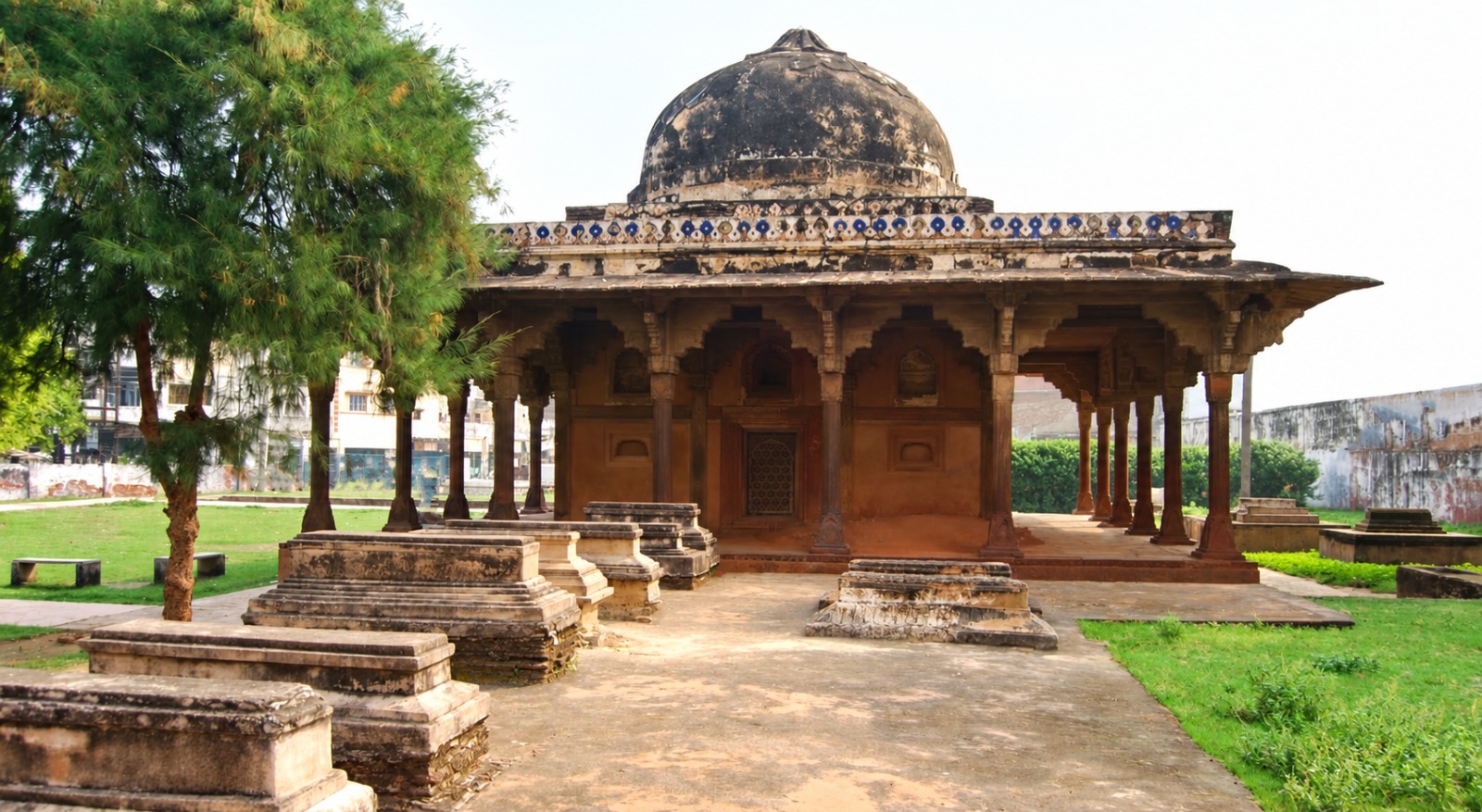
That chapter still stands in Yahiyaganj. Called Nadan Mahal, this red sandstone monument rarely makes it to Lucknow’s heritage trails. There are no long queues, no crowds stopping for photographs, no grand spectacle around it. Just a centuries-old structure preserving the story of a time when Awadh was still a Mughal province and Lucknow was yet to become the city everyone knows today.
The monument that doesn’t speak the nawabi architectural language

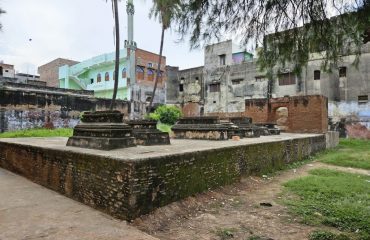
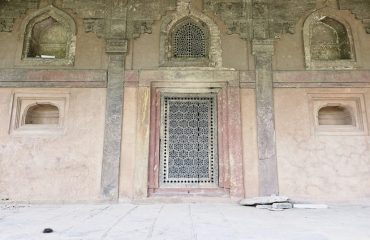
The mausoleum is associated with Shaikh Abdur Rahim, a Mughal-era governor (Subedar) of Awadh during Emperor Akbar’s reign. His story belongs to a period when Awadh was not an independent seat of power but an important administrative region of the Mughal Empire. Governors, military commanders and administrators shaped the region’s early political landscape, laying foundations that would eventually support the rise of the Nawabs nearly two centuries later.
Look at it properly and Nadan Mahal reads almost like a rebuttal to everything Lucknow is famous for. Nawabi architecture is built to perform, the Bara Imambara stacks vaulted halls into a maze designed to disorient, its facade broken up with cusped, scalloped arches and guncha-style minarets that exist purely for silhouette. Chattar Manzil borrows umbrella domes and European colonnades wholesale, dressing a Mughal skeleton in lime-plaster stucco meant to look, from a distance, like marble. Rumi Darwaza is a gateway with nothing to gate, pure theatre, built the year famine hit the city, to give hungry labourers work and give Lucknow a skyline.
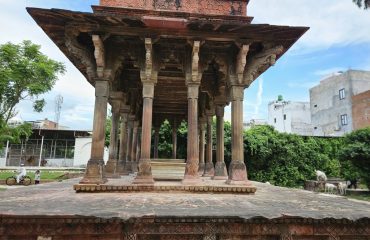
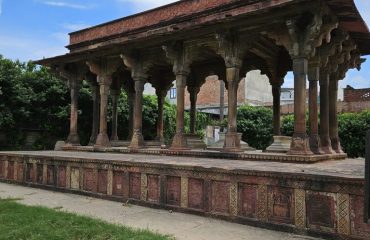
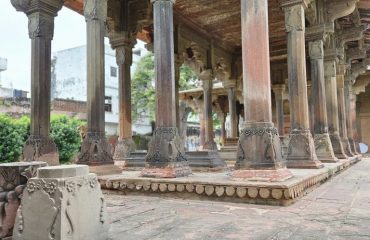
Nadan Mahal has none of that vocabulary. It’s dressed stone, not plastered brick, red sandstone cut and set, not moulded and painted. The chamber is a plain square on a raised plinth, domed, wrapped in an open verandah with no false fronts or hollow arches to bulk up its scale. Where Nawabi facades chase asymmetric drama, this one is rigidly symmetrical, twelve pillars holding up the pavilion in a grid rather than a flourish. The jaalis are structural, ventilation and shade, not ornamental screens for effect. Even the Solah Khamba next door, sixteen fluted pillars carrying brackets carved into elephant heads, borrows from older Hindu stone-craft rather than the Perso-European mash-up the Nawabs would later favour.
The Mughal Subedar who became Awadh’s ruler for two whole days

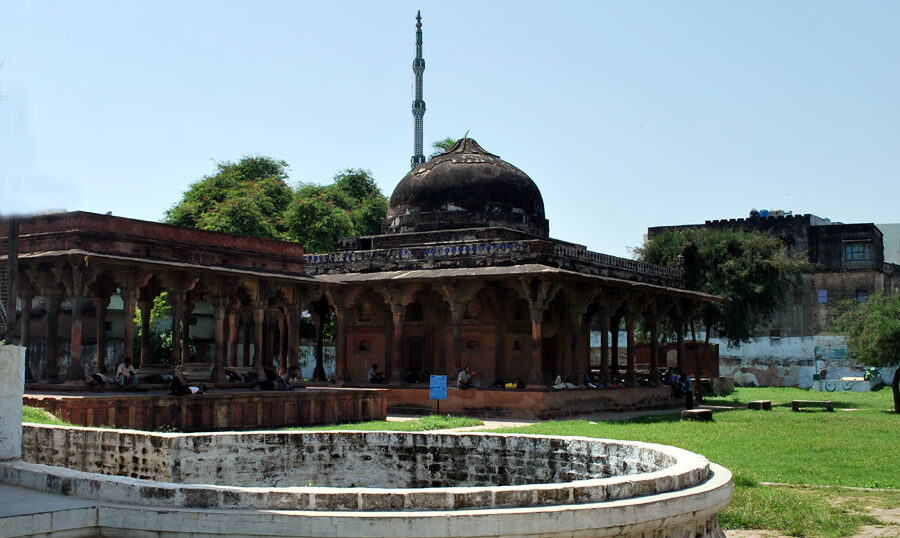
That plainness makes sense once you know what this building actually was. Nadan Mahal comes from an era when Awadh wasn’t its own kingdom, it was just one of twelve provinces Akbar had carved the Mughal Empire into back in the 1570s, each one run by a governor who answered to Delhi, not a king who answered to no one. Sheikh Abdur Rahim, buried here, was that governor.
There’s even a legend attached to him, that Akbar once handed him the throne for two days after astrologers warned of a cursed stretch on the calendar, and the danger passed only when someone found a cobra hidden in the emperor’s own robes. Rahim later built two more landmarks in the city, Machchi Bhawan and the Panch Mahal, laying down the administrative backbone Lucknow is still built on today.
The Nawabs didn’t turn up until 1722, when Saadat Khan quietly upgraded a governorship into a dynasty, and Awadh stopped taking orders from Delhi. Every dome and gateway Lucknow now sells as heritage is downstream of that one bureaucratic sleight of hand.
The forgotten foundations of Nawabi Lucknow

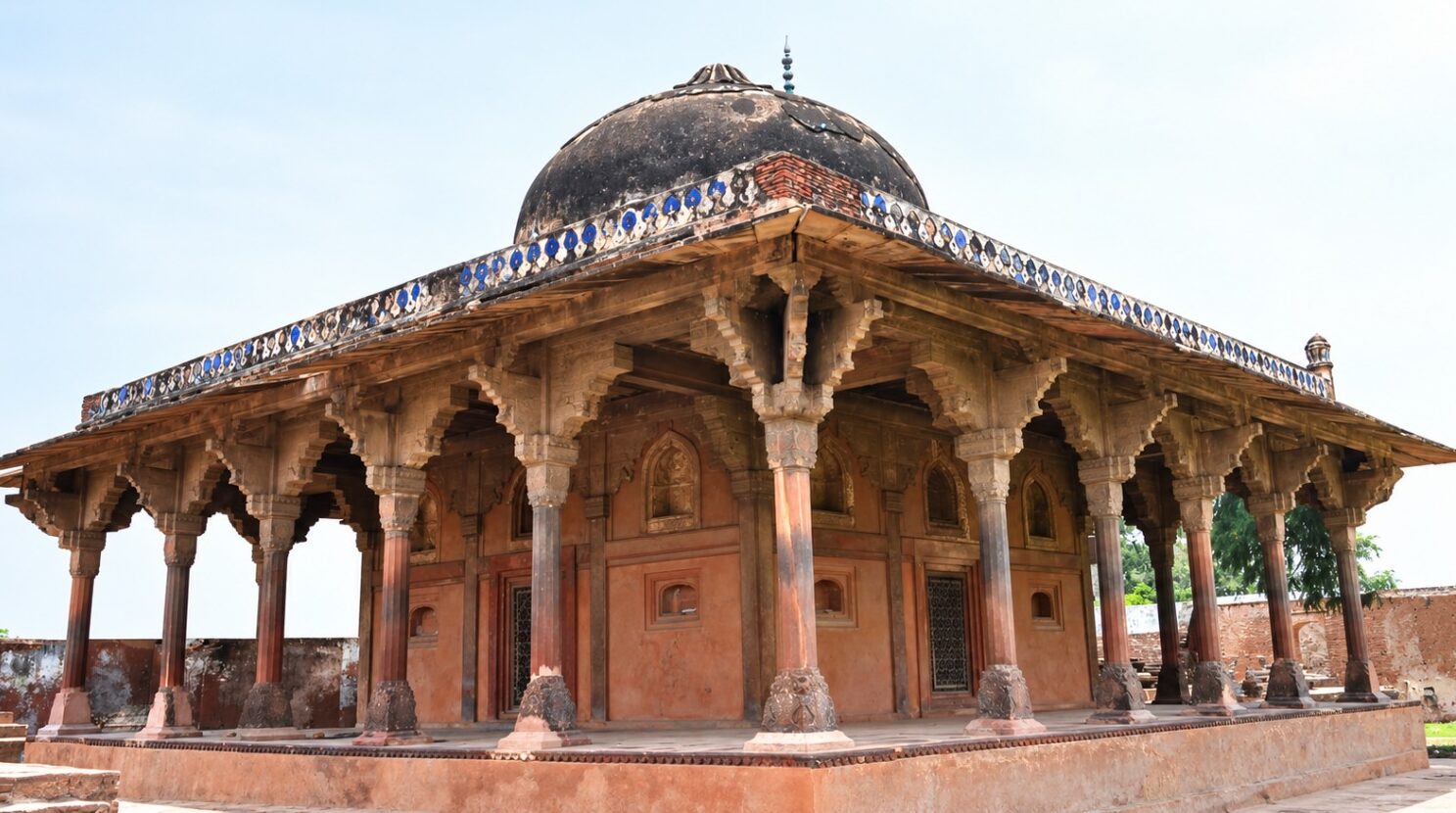
Nadan Mahal may never make it to the usual “Lucknow must-visit” lists, and perhaps that is fitting. It was never a monument that demanded attention. Instead, it quietly holds on to a chapter of Awadh that existed before the Nawabs turned Lucknow into a city of grandeur and legend. A subedar’s resting place, it has outlived both the Mughal system that appointed him and the dynasty that followed.
No crowds, no cameras, no grand celebrations, just an old stone structure preserving the memory of an Awadh that came before the one the world remembers. In a city that proudly celebrates its Nawabi past, Nadan Mahal keeps the forgotten first pages alive, a quiet reminder that every grand story has a beginning, and someone has to remember it.
