






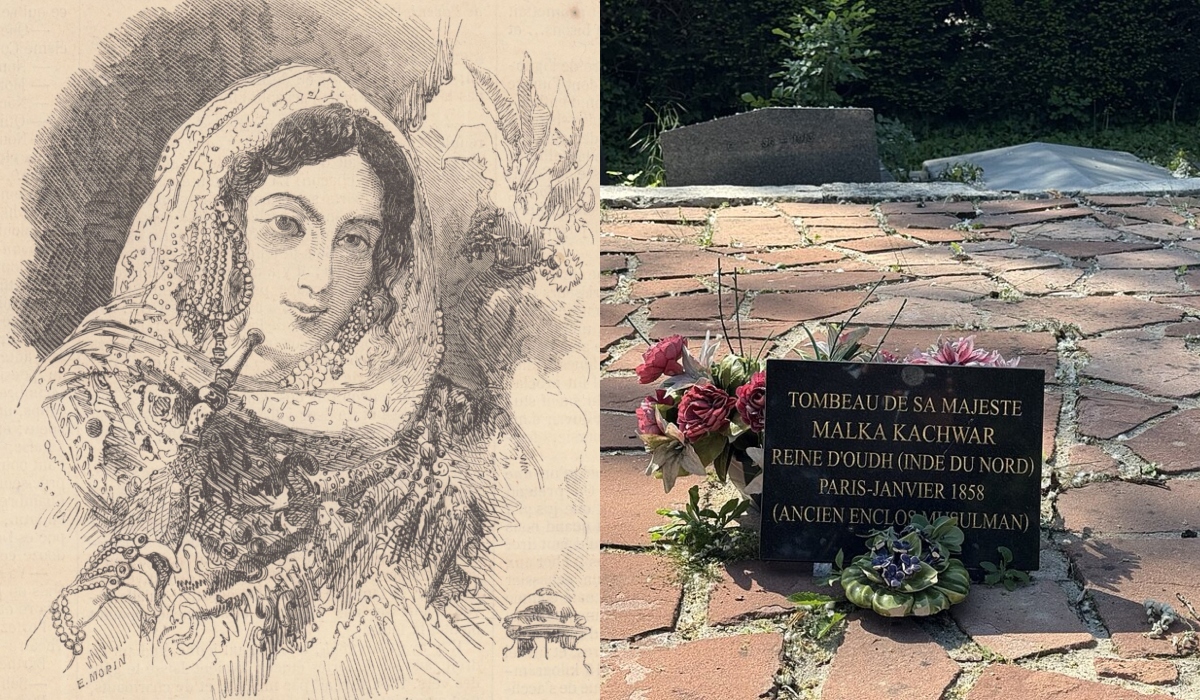
Malika Kishwar was the Queen Mother of Awadh, but nothing about her early life suggested she would one day cross the sea to argue her family’s case before the British Crown. She belonged to Lucknow’s royal zenana, a world shaped by purdah, where a woman could be close to power while remaining largely unseen beyond the court. Then the British annexed Awadh in 1856 and deposed her son, Wajid Ali Shah. When he was unable to travel to Britain to challenge the decision, Kishwar went in his place. She left behind the familiar walls of the zenana and embarked on a journey that took her through British officialdom, unfamiliar customs and eventually to Queen Victoria herself, carrying the cause of a kingdom her family had just lost.
When the woman behind the veil had to speak for Awadh

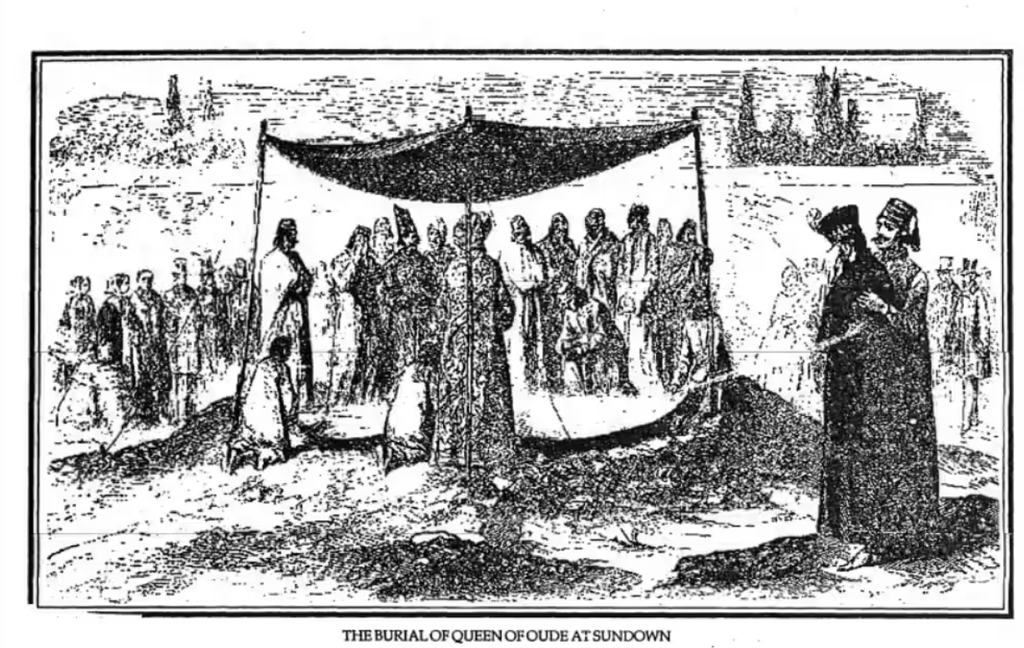
The journey itself was extraordinary. In June 1856, Kishwar left Calcutta with a large entourage, travelling by sea towards Britain. She was not simply accompanying her son or representing royal protocol, she was carrying a political mission. Her aim was to challenge the British justification for annexing Awadh and to appeal to the British Crown on behalf of Wajid Ali Shah. But the further she travelled from Lucknow, the more visible the contradictions of her position became.
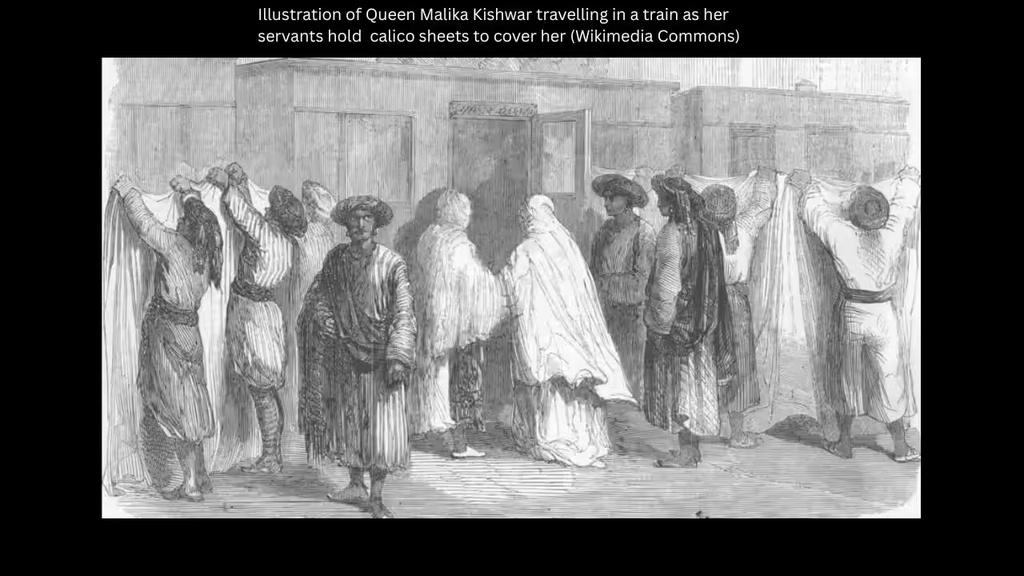
In Britain, Malika Kishwar was both a political figure and a curiosity. The British public had little familiarity with the elaborate conventions of Awadh’s court, and her strict observance of purdah made even ordinary movement complicated. At Southampton, her attendants reportedly had to hold sheets around her to create a temporary screen as she moved from her carriage to the railway. A woman accustomed to being shielded from public view had suddenly become the subject of public fascination. Yet Kishwar was not in Britain to be looked at. She was there to be heard.
She spent months pursuing her case through British official circles, seeking an audience with Queen Victoria and hoping the Crown might intervene in the fate of Awadh. The irony was difficult to miss, the woman whose life had been structured around seclusion was now navigating the political machinery of the country responsible for dispossessing her family.
The queen who reached Britain, but could not reach home


When she finally met Queen Victoria at Buckingham Palace on July 4, 1857, even that encounter carried the rules of her old world into the heart of the new one. Purdah was still observed, with arrangements made to ensure that male members of the household would not see her. The meeting therefore became a remarkable intersection of two very different forms of royal power, the Queen of Britain’s vast empire meeting the Queen Mother of a kingdom that empire had absorbed. By then, however, the political landscape had shifted dramatically. The uprising of 1857 had begun, Wajid Ali Shah remained in Calcutta, and there was little chance that Britain would reverse the annexation of Awadh. Kishwar’s mission had effectively reached a dead end.
Even her return journey became entangled in the new political reality. When she later attempted to travel towards Mecca, she was told she would require a British passport, an acknowledgement, in its own bureaucratic way, that the kingdom whose rights she had travelled so far to defend was no longer recognised as sovereign.
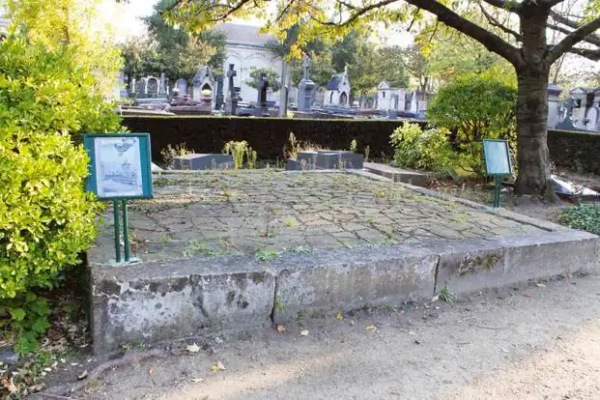
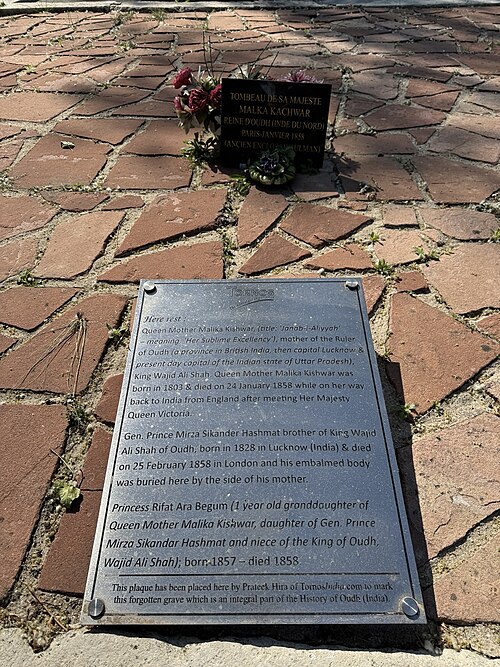
She refused the passport and eventually made her way towards France. In January 1858, Malika Kishwar reached Paris. She died there the following day and was buried at Père Lachaise Cemetery, thousands of miles from Lucknow.
The journey from being secluded to being heard

Malika Kishwar did not succeed in bringing Awadh back, and her appeal could not change the fate of her son or kingdom. But what she did in getting there is what makes her story so striking. She came from a world where purdah shaped how a royal woman moved, lived and was seen. Yet when her family’s kingdom was taken, she stepped beyond those boundaries and took on a role that demanded something entirely different, she had to speak, negotiate and make herself heard. She travelled across the sea, dealt with British officials and pursued an audience with Queen Victoria, carrying the cause of Awadh far beyond the walls of the Lucknow zenana.
She did not stop being a woman of the zenana when she left Lucknow. She simply found a way to become a political negotiator within the limits of the world she knew, and took that world all the way to Buckingham Palace.
