


















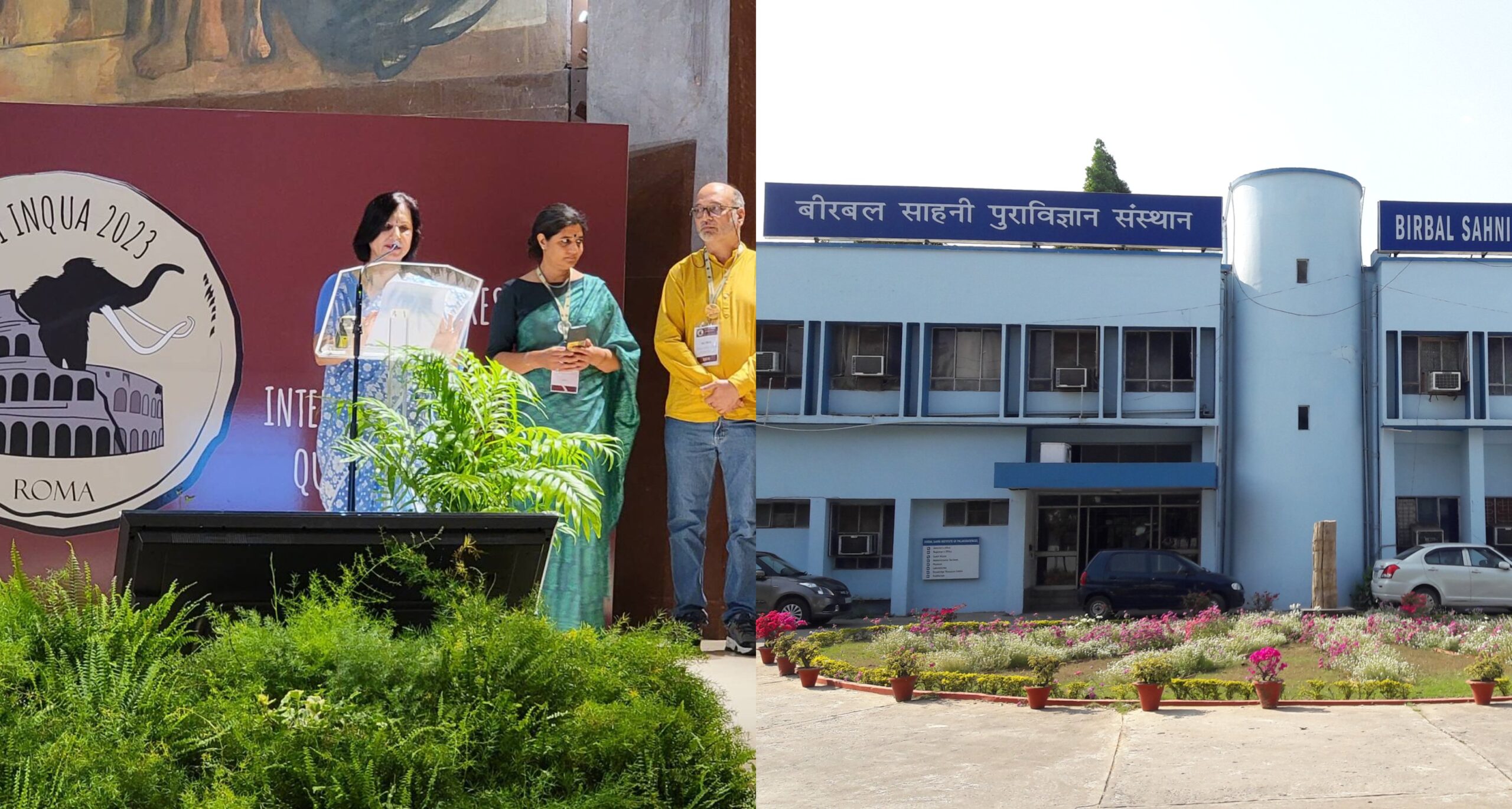
Lucknow, following the successful organization of the G20 DEWG meet earlier this year, is once again preparing to host another international conference. In a historic achievement for India, the country has secured the bid to host the 100th edition of the International Union for Quaternary Research (INQUA) congress for the first time ever. The prestigious event is scheduled to take place between February 20-28, 2027.
The INQUA congress, held every 4 years at different international locations, will now take place at the Birbal Sahni Institute of Palaeosciences (BSIP) in Lucknow.
India’s significant triumph by winning the hosting rights for INQUA 2027
Fantastic news! India secures the bid to host INQUA-INDIA 2027 after winning the vote at the #INQUA council in Rome, Italy.
Join #BSIP @ncaor_goa @AOQRIndia for the scheduled event in Lucknow, India 2027@PMOIndia @IndiaDST @DrJitendraSingh @guptaakhilesh63#INQUARoma2023 pic.twitter.com/wxYDNxUisE— Birbal Sahni Institute of Palaeosciences (@BSIP_official) July 20, 2023
India’s successful bid to host the INQUA meeting is considered highly significant. It marks the first time that India will host this prestigious international congress, making it a momentous occasion for the country.
The bid victory was hard-fought, requiring dedicated efforts from various Indian member bodies, including BSIP Lucknow, Ministry of Earth Sciences (MoES), Indian National Science Academy (INSA), National Centre for Polar and Ocean Research (NCPOR) and Association of Quaternary Research (AOQR).
Besides, Professor Pradeep Shrivastava from IIT Roorkee has been named the President for the INQUA congress in 2027. The announcement regarding India’s hosting rights for the meeting was made during the ongoing INQUA meeting in Rome.
What is the importance of INQUA international congress?
Congrats to #India who will host the 2027 @INQUA Congress! pic.twitter.com/5UMuI2alXg
— INQUARoma2023 (@InquaRoma2023) July 20, 2023
INQUA, the International Union for Quaternary Research, was established in 1928 by a group of scientists aiming to enhance understanding of environmental changes during the glacial ages through interdisciplinary studies. The first INQUA congress took place in Denmark, Copenhagen, in the same year.
The primary objective of INQUA is to foster improved communication and international collaboration in both experimental and applied aspects of Quaternary research.
Today, more than 46 member countries including India, contribute to INQUA’s vitality. Through their international collaborations and meets, the organization seeks to contribute practically to assessing the scale and rates of global environmental changes during the recent geological past.