



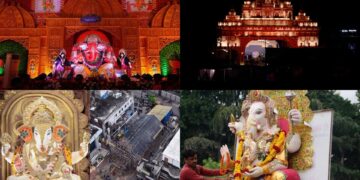
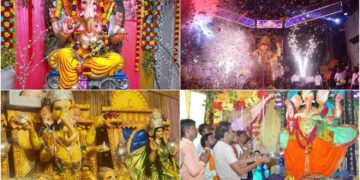



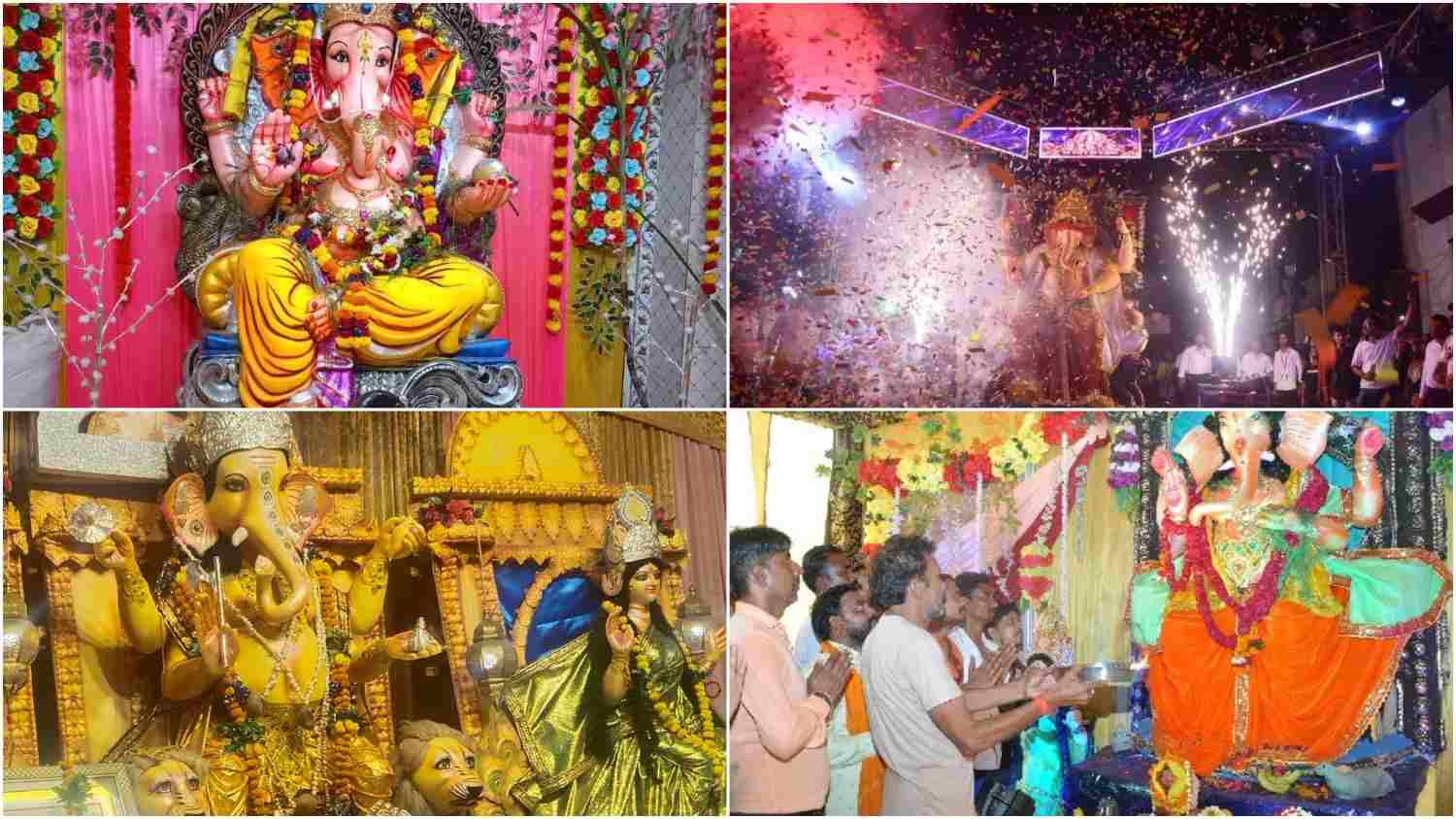
Kanpur’s Ganesh Chaturthi calendar has quietly grown into something with its own weight, and nine pandals in, it’s clear this wasn’t planned so much as it just kept happening. Some go for scale, towering idols, silver crowns, facades that outgrow the building behind them. Others lean on ritual, running full traditional worship without cutting a single corner for convenience. A few turn ordinary spaces, a busy chauraha, a park, a stretch of market, into something briefly unrecognisable. None of them are copying each other, and none of them needed to. What ties this list together isn’t a shared formula, it’s nine different cities-within-the-city, all deciding independently that Bappa’s arrival deserved more effort than the rest of the calendar gets. Kanpur didn’t ask for a Ganesh Utsav scene this layered, it built one anyway.
Lal Bangla Cha Raja
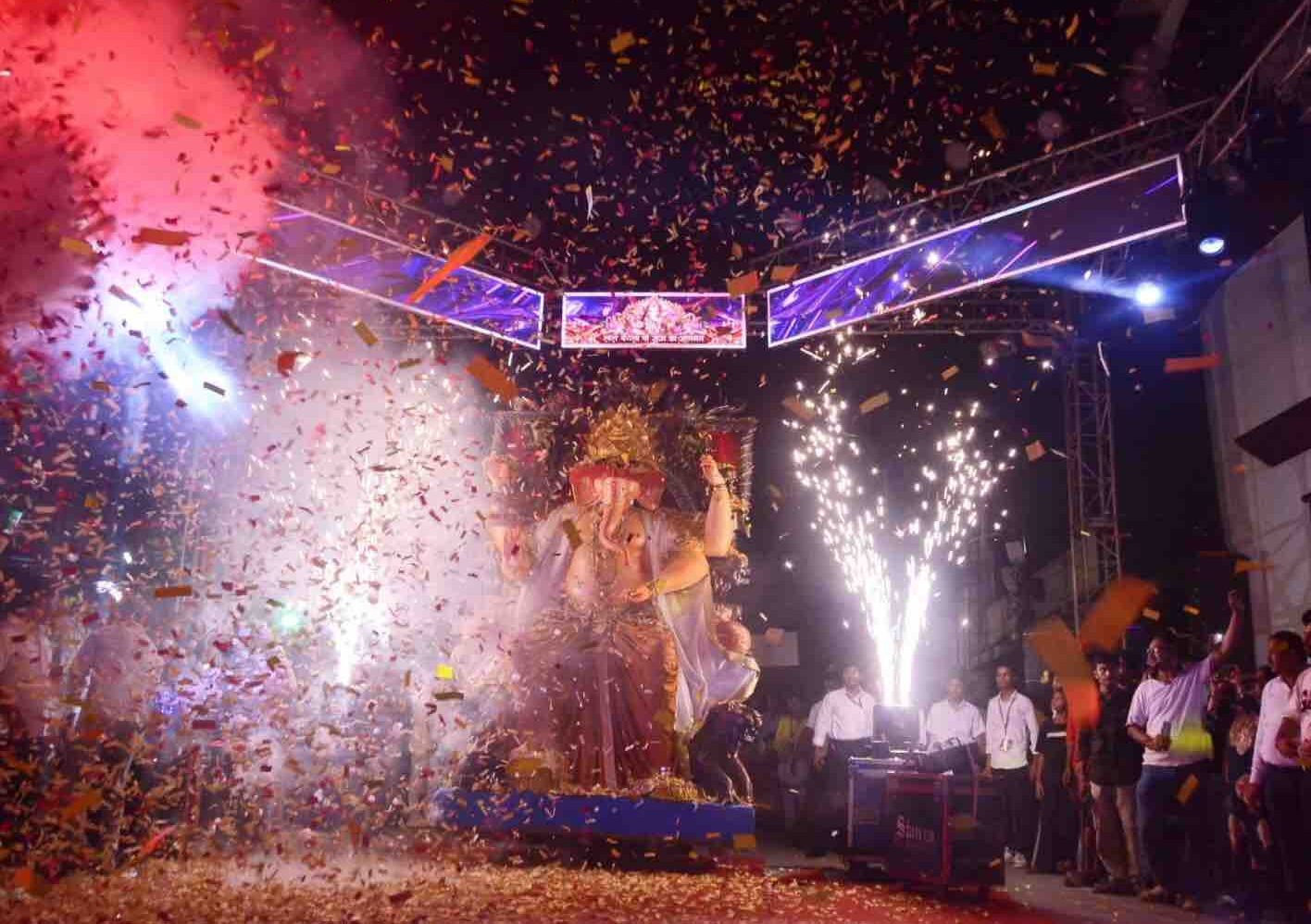
Every city has a pandal that claims to be the biggest, but Kanpur’s Lal Bangla Cha Raja backs the claim with something harder to fake, a pure silver crown, remade annually, this year valued at ₹3.50 lakh. Modelled on Mumbai’s Lalbaugcha Raja and matching its crowd-pulling reputation, it’s turned an homage into its own institution. The idol draws the devotees, the crown is what they’re talking about on the way out.
Where- Shivkatra, Lal Bangla
Rambagh ke Raja
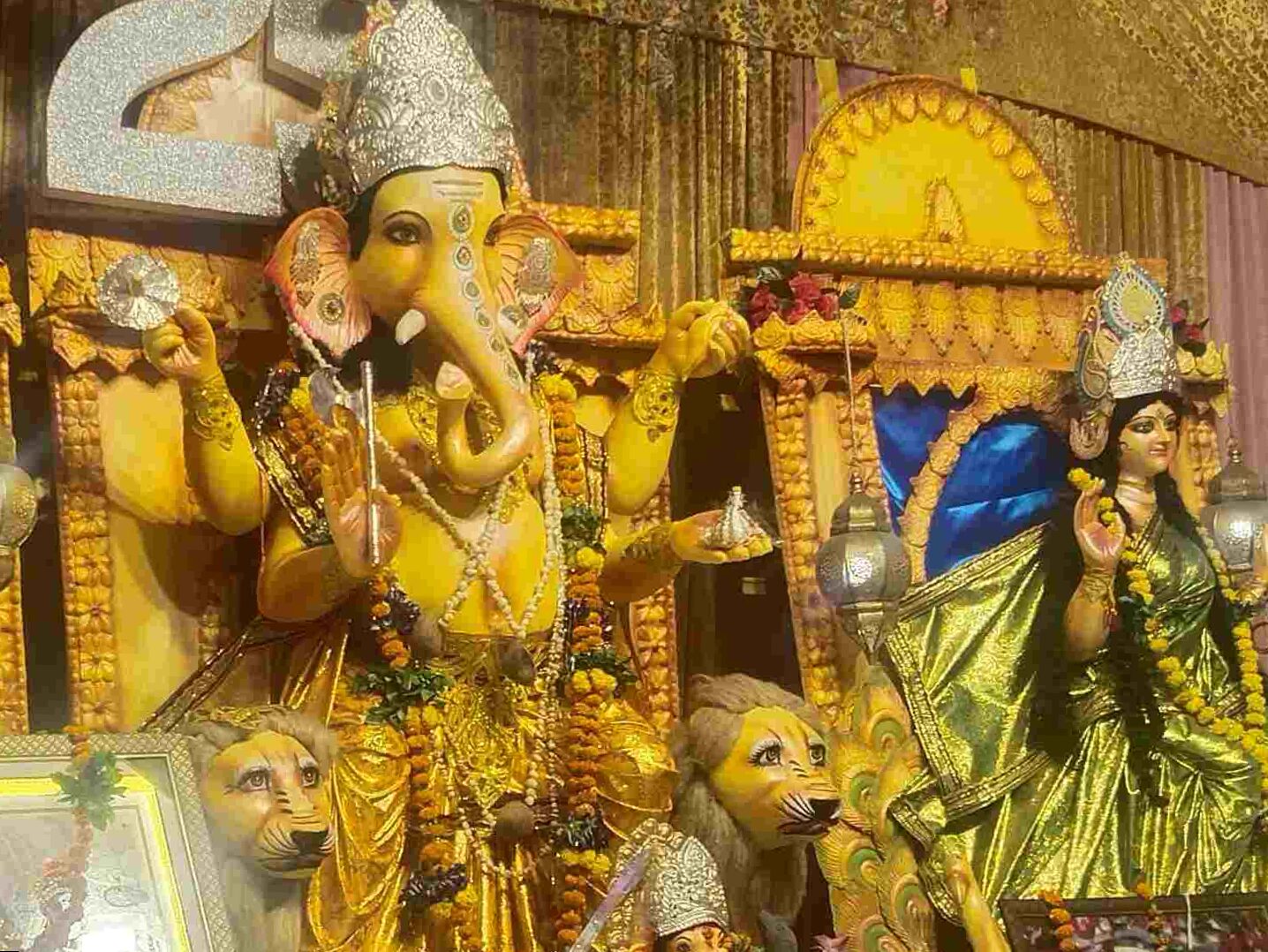
“Grand” gets thrown around loosely during Ganesh Chaturthi, but Rambagh ke Raja treats it as a baseline requirement, not a marketing line. A tall idol, decorations built around a fresh theme each year, tableaux that add context most pandals skip, and a Maha Aarti timed to matter, none of it reads as excess, just as what the Shri Shri Ganesh Navayuva Mandal considers standard practice. Everyone else’s spectacle is their routine.
Where- Ram Bagh, near Har Sahai PG Colleg
Ganga Ghat Ke Raja
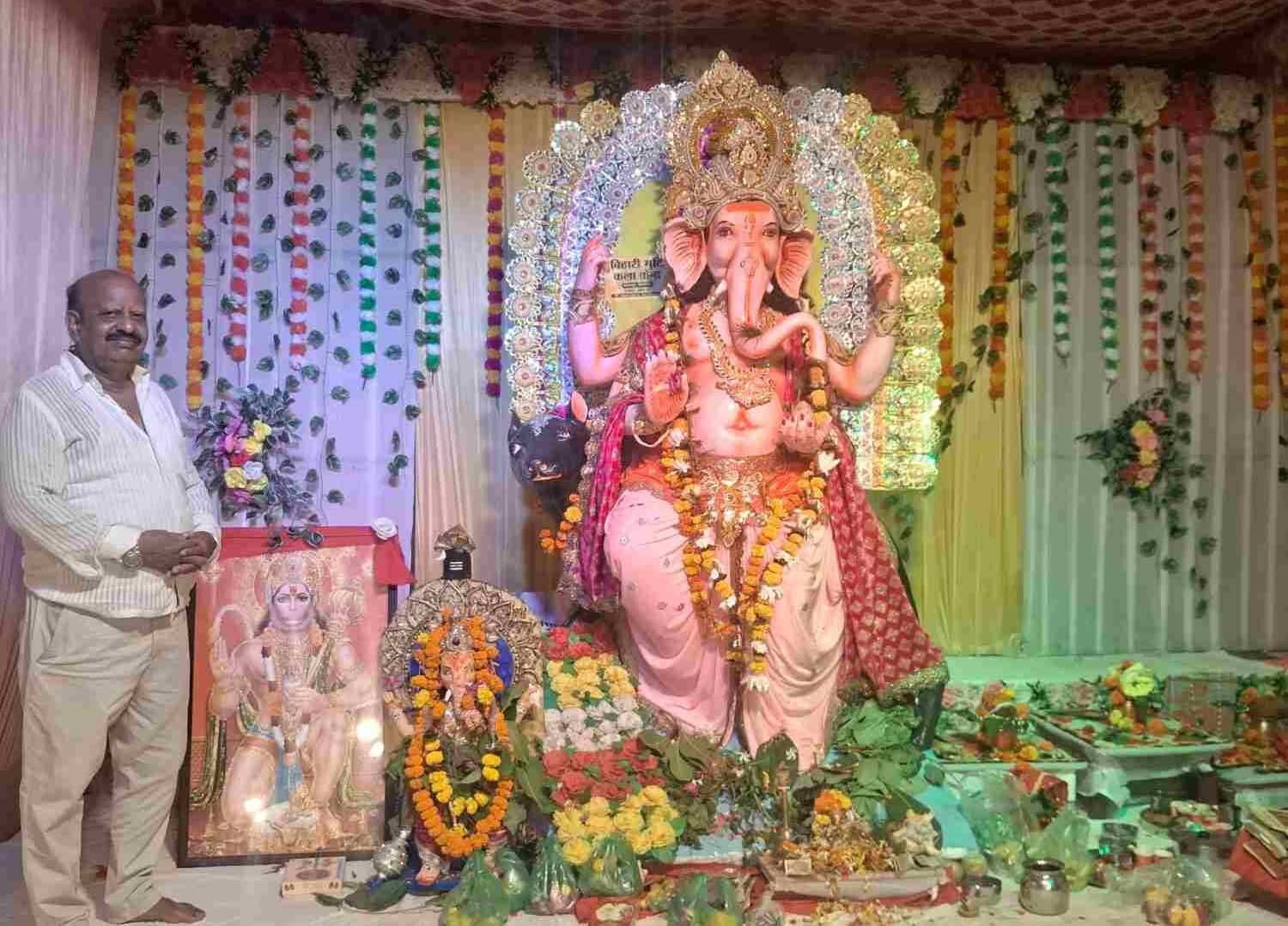
Plenty of pandals claim grandeur; fewer can claim a location that does half the work for them. Sitting right where Kanpur’s border meets Shuklaganj on the banks of the Ganga, this one earned the name “Ganga Ghat ke Raja” less through marketing and more through simple positioning. The idol is suitably huge, the arrival celebrations pull in crowds that treat it as a proper event, and the river backdrop turns a big statue into something closer to a landmark. Location as strategy, and it’s working.
Where- Shuklaganj
Shri Siddhivinayak Ganesh Temple
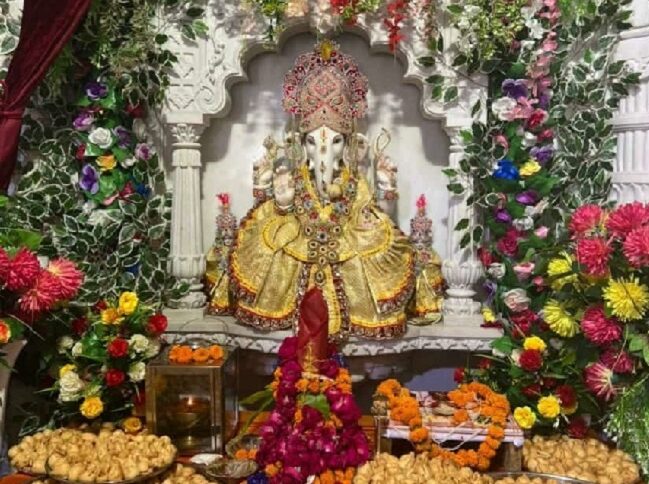
Lighting and flowers are the easy part of a festival glow-up; this temple goes further. The giant Ganesha structure on the facade gets the attention, sure, but the real commitment shows up in the schedule, daily Vedic chants that don’t skip a day, bhandaras that keep community feeding part of the celebration rather than a side note, and cultural programs filling whatever time is left. Decoration is temporary, this is closer to a full operational shift for the festival’s duration.
Where- Canal Road, near Ghantaghar
Kakadeo Pandal
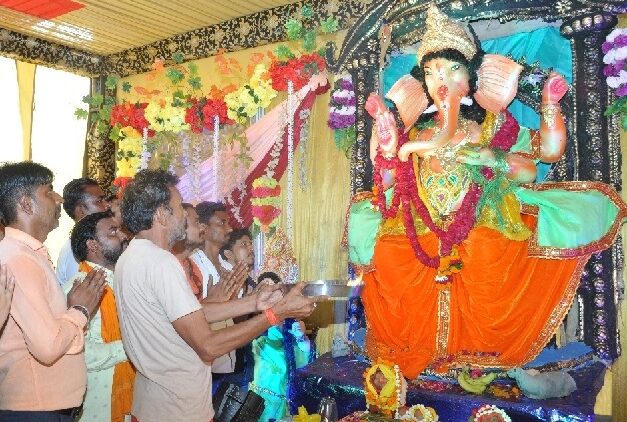
“Community celebrations, decorative themes, evening aartis” reads like the safest possible way to describe a pandal, the kind of copy that undersells everything on purpose. Kakadeo’s version leans into all three without needing more, favouring a theme that actually shifts the visual identity year to year, aartis that turn into the evening’s main draw rather than a formality, and a community pull that doesn’t need a marketing push to fill the space. Understated on paper, considerably less so once you’re standing in it.
Where- Manas Vansh Park Ground, Kakadeo
Bajrang Chauraha Pandal
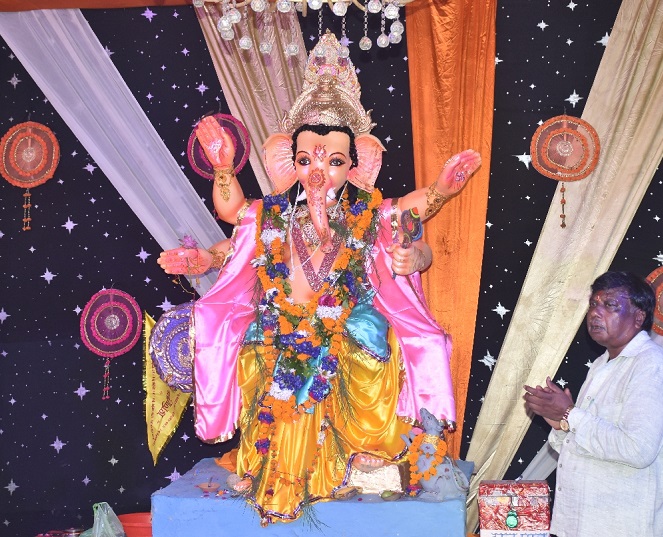
No elaborate backstory, no decades-long legacy claim, Bajrang Chauraha’s pandal makes its case purely through execution. Digital lights do the heavy lifting after dark, fresh flowers keep things grounded rather than purely electronic, and the large Ganesha idol gives the whole junction a focal point it doesn’t normally have. It’s a straightforward pitch: good decoration, well placed, no need to oversell it. Sometimes that’s the whole reason a pandal makes the list.
Where- Barra 7, ward 68 ward 95
Shivala ke Raja
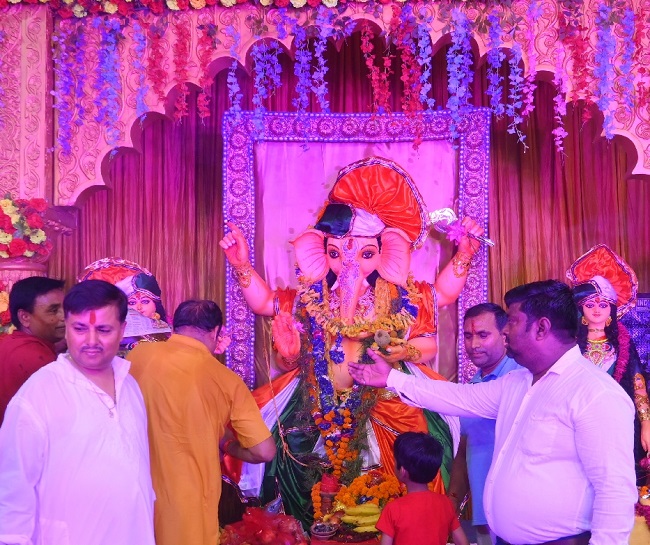
Shivala Bazaar spends most of the year being a market, and for a few days during Ganesh Chaturthi, it quietly becomes something else entirely. The pandals go up across the area with grand tableaux and Maha Aarti drawing the evening crowd, but the real pull is the Chhappan Bhog, fifty-six dishes offered up and distributed as prasad at multiple spots, turning darshan into something closer to a feast. Devotees come for Bappa, they stay for the fact that this market suddenly feeds everyone who shows up.
Where- Shivala Market, Bada Chauraha
Lathi Mohal Ke Raja
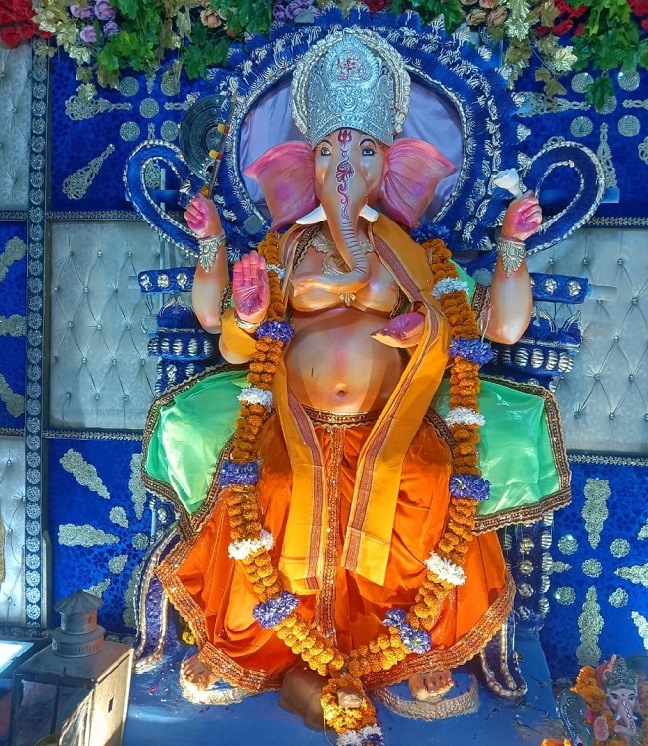
By the time you’ve heard “Lathi Mohalla Ke Raja” mentioned twice in the same conversation about Kanpur’s Ganesh Chaturthi, it’s already done half its job. The pandal delivers on the reputation with a genuinely enormous idol, full traditional rituals carried out with visible enthusiasm rather than obligation, and crowds who’ve clearly made this stop non-negotiable on their darshan route. Famous is easy to claim, living up to it, year after year, is what’s kept the name circulating.
Where- Lathi Mohal, General Ganj
Phool Bagh Ganesh Pandal
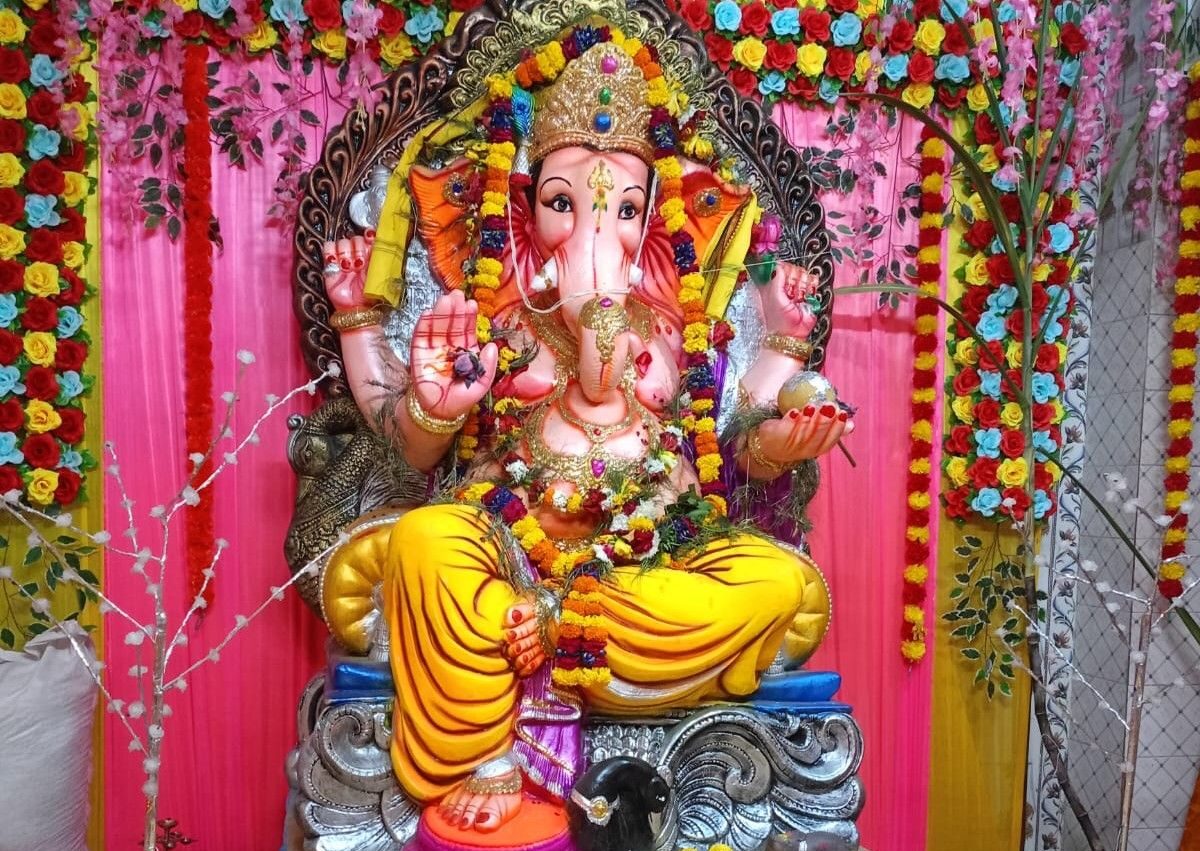
The idol installations at Phool Bagh get the attention, but the more interesting part happens before that, artisans setting up stalls right around the park, building the pieces devotees will later gather to see. The Aagman processions add their own momentum, and the evening aartis turn into a daily rhythm rather than a scheduled highlight. It’s less a single grand moment and more a sustained routine, which might explain why people keep showing up night after night instead of just once.
Where- Where- Ram Narayan Bazar, Phool Bagh