

















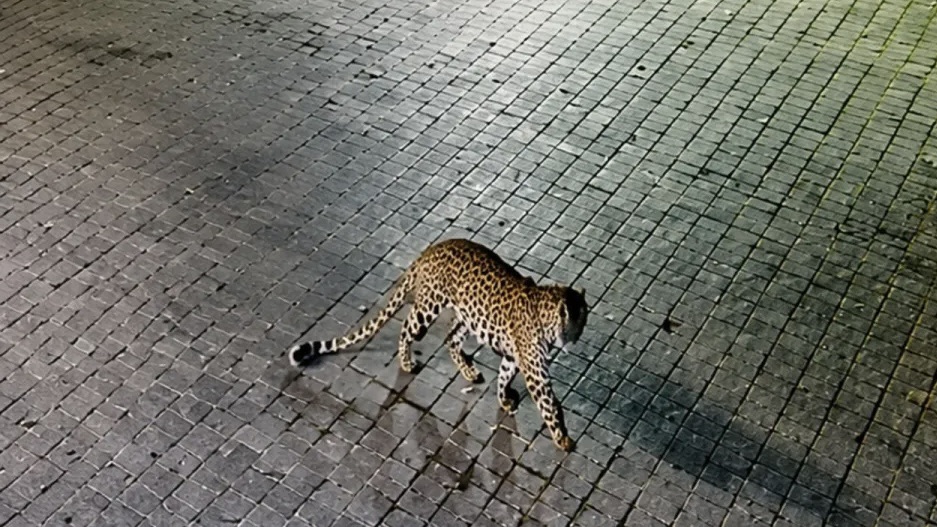
Panic spread across Ahmedabad’s Ghuma area on Monday after a leopard was spotted inside Sharandeep Society, prompting a large-scale search and rescue operation by the Gujarat Forest Department and Kankaria Zoo. CCTV footage of the animal moving through the residential complex surfaced online, following which authorities rushed to the spot.
Officials said the leopard was last seen near a house within the society and efforts are underway to safely capture and relocate it.
Rescue operation underway
Teams from the Gujarat Forest Department and Kankaria Zoo have been deployed to trace the leopard’s movement within and around the housing society. Officials are using CCTV footage and on-ground surveillance to monitor the animal and safely trap it before relocating it to its natural habitat.
Authorities said the operation is ongoing and have appealed to residents not to gather near the search area or interfere with rescue efforts.
Residents advised to stay cautious
Residents of Sharandeep Society and nearby neighbourhoods have been urged to remain indoors where possible, avoid venturing into isolated areas and immediately report any fresh sightings to the Forest Department. Officials have also advised people to keep children and pets indoors until the rescue operation concludes.
Why are leopard sightings increasing?
Wildlife experts have linked the rise in leopard sightings across Gujarat to rapid urban expansion, habitat fragmentation and a shrinking natural prey base. As development extends closer to forested areas, encounters between humans and leopards have become more frequent in several parts of the state.
According to the latest statewide census, Gujarat’s leopard population increased from 1,395 in 2016 to 2,274 in 2023, making effective wildlife management and habitat conservation increasingly important.
The latest sighting in Ghuma adds to a growing number of human-wildlife encounters reported across Gujarat in recent years. While such incidents often trigger concern among residents, forest officials continue to advise the public to avoid approaching wild animals and allow trained rescue teams to handle the situation safely.