









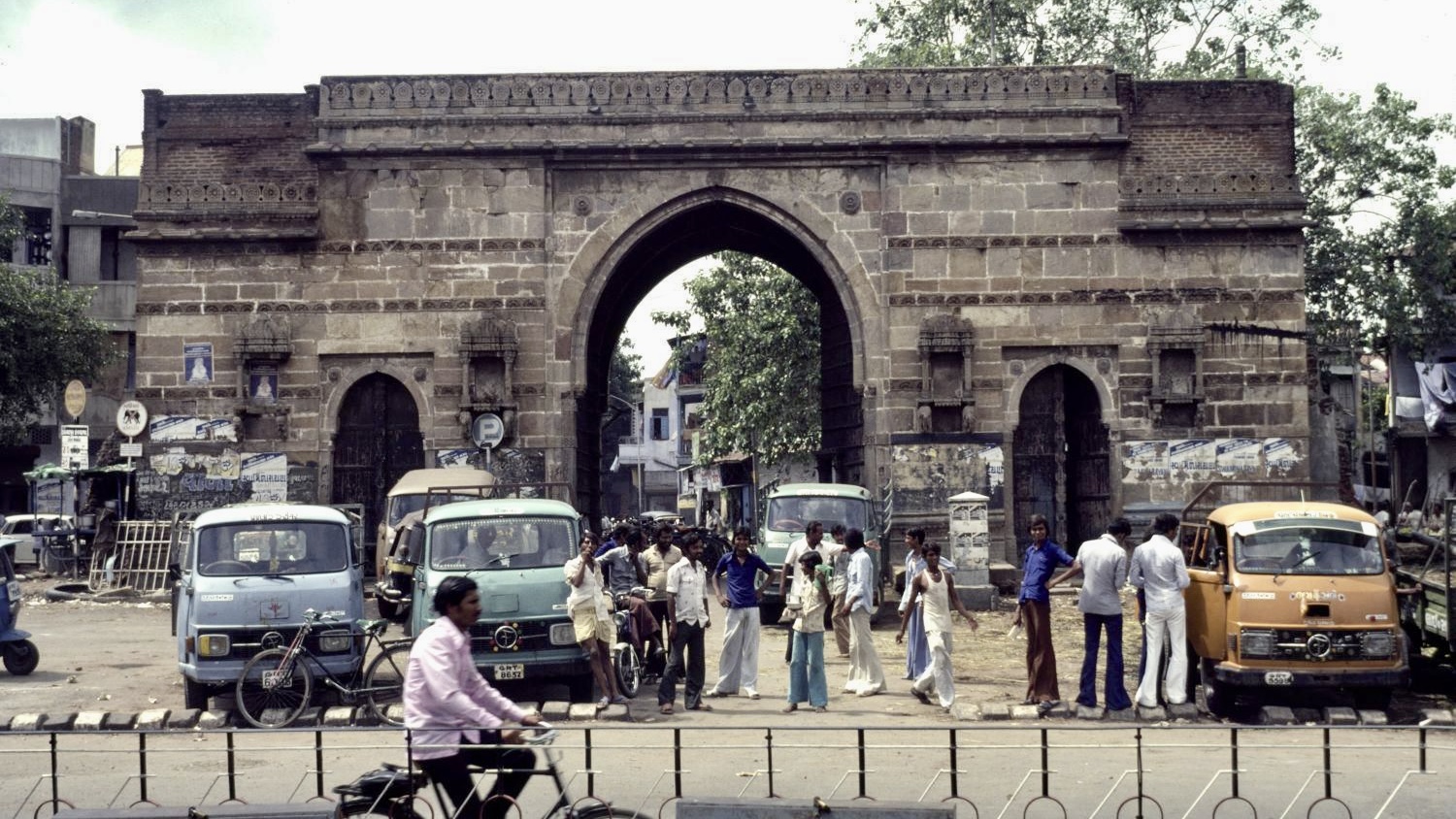
A Darwaza may simply mean a gateway, but in Ahmedabad, these old gates are much more than points of entry. They have marked royal routes, guarded the walled city, watched traders come and go and slowly become part of everyday city life. Long before Google Maps, these were the landmarks people relied on to find their way around. From royal processions to crowded markets, here are 8 historic Darwazas that still hold a piece of Ahmedabad’s story.
1. Teen Darwaza
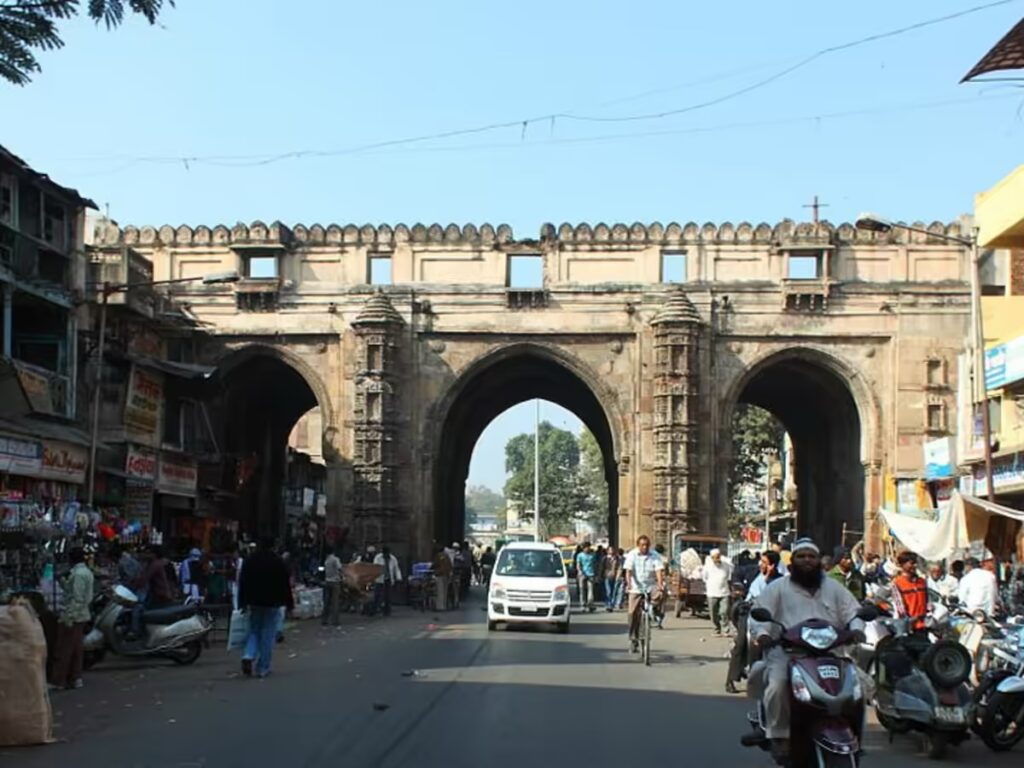
Teen Darwaza was built by Sultan Ahmad Shah I after Ahmedabad was founded in 1411 and completed in 1415. Its three arches once formed the royal entrance to Maidan-e-Shahi, where courtiers gathered and the Sultan held military reviews. The gateway has witnessed its share of drama. In 1459, young Sultan Mahmud Begada reportedly marched through it with just 300 horsemen to confront rebel nobles. It also carries the famous Lakshmi legend, linked to the eternal lamp that has traditionally been kept burning at the gateway. In 1812, a Maratha-era inscription on Teen Darwaza called for daughters to receive their rightful share of ancestral property. Today, the royal courtyard is a packed marketplace, with thousands of hawkers and shops turning this centuries-old gateway into one of Ahmedabad’s busiest urban landmarks
Where: Old City, Bhadra
2. Delhi Darwaza
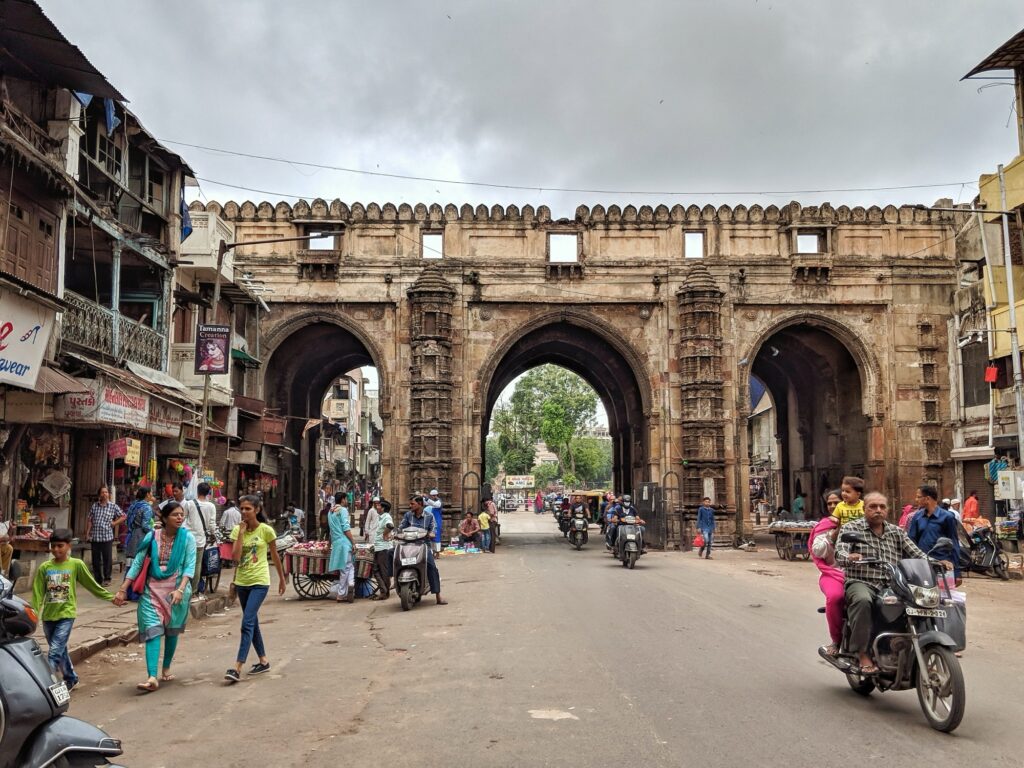
Also known as Idariyo Darwajo, Delhi Darwaza dates to the reign of Sultan Mahmud Begada. The Idar connection comes from his campaign towards Idar, while its later route towards Delhi gave the gate its more familiar name. The gateway has three stone arches, iron-plated timber doors and carved elephant and lion details. Two smaller pedestrian openings were added in 1878 during British rule. Today, seasonal stalls line the road, selling kites, colours and festive goods. Nearby landmarks include Hutheesing Jain Temple and Shahibaug.
Where: Mirzapur Road, Old City, Halim Ni Khadki, Shahpur
3. Dariyapur Darwaza
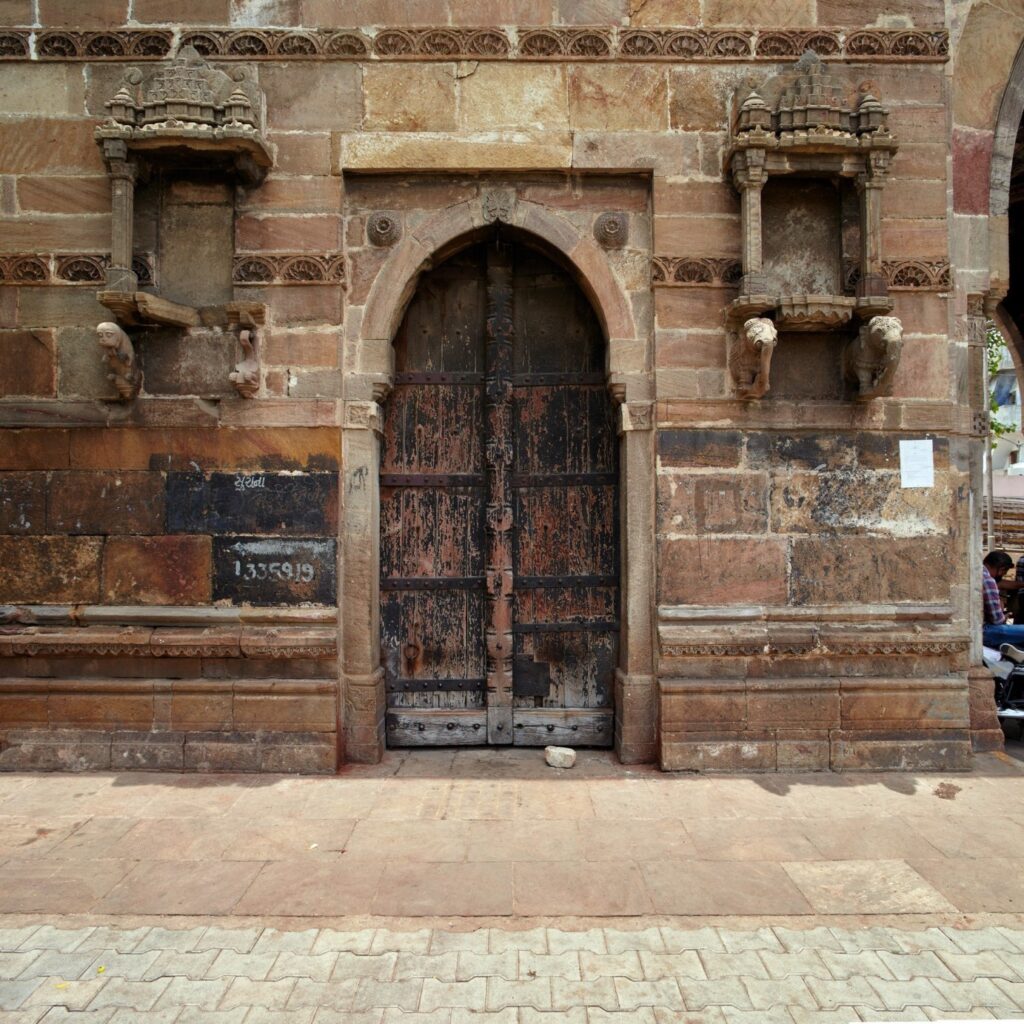
Dariyapur Darwaza was built as part of the city’s second fortification, primarily to allow Sultanate soldiers and military convoys to pass through. It was named after Dariya Khan, a close adviser and childhood friend of Sultan Mahmud Begada. The gateway features three stone arches, iron-plated timber doors and a roofed platform. Its largest arch rises about 22 feet. Nearby stands Dariya Khan’s Ghuumat, one of Gujarat’s largest domed tombs. Its unusual combination of brick, Kotta stone and lime mortar is particularly notable. Local folklore also surrounds the tomb with stories of paranormal activity. The Darwaza, therefore, has quite the backstory: soldiers on one side, a powerful noble on the other, and a mysterious dome keeping the legends alive.
Where: Old City, Delhi Chakla, Dariyapur
4. Raipur Darwaza
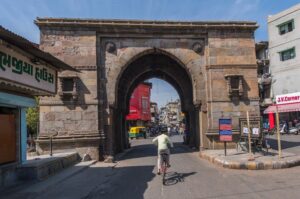
Raipur Darwaza was one of the gateways of Ahmedabad’s second, larger fortification. It was built to protect the expanded city and control access through its southern and eastern approaches. Historical descriptions record three stone arches, iron-plated timber doors and a substantial roofed platform. The gate’s location is particularly useful for understanding Ahmedabad’s old-city geography. It stands close to the pols and markets of Khadia, where dense residential clusters and commercial streets developed around the fortified city. The Raipur name remains attached to the surrounding area, proving that a gateway can leave a mark on a city even after the defensive logic behind it has disappeared.
Where: Old City, Khadia
5. Astodia Gate (Astodia Darwaza)
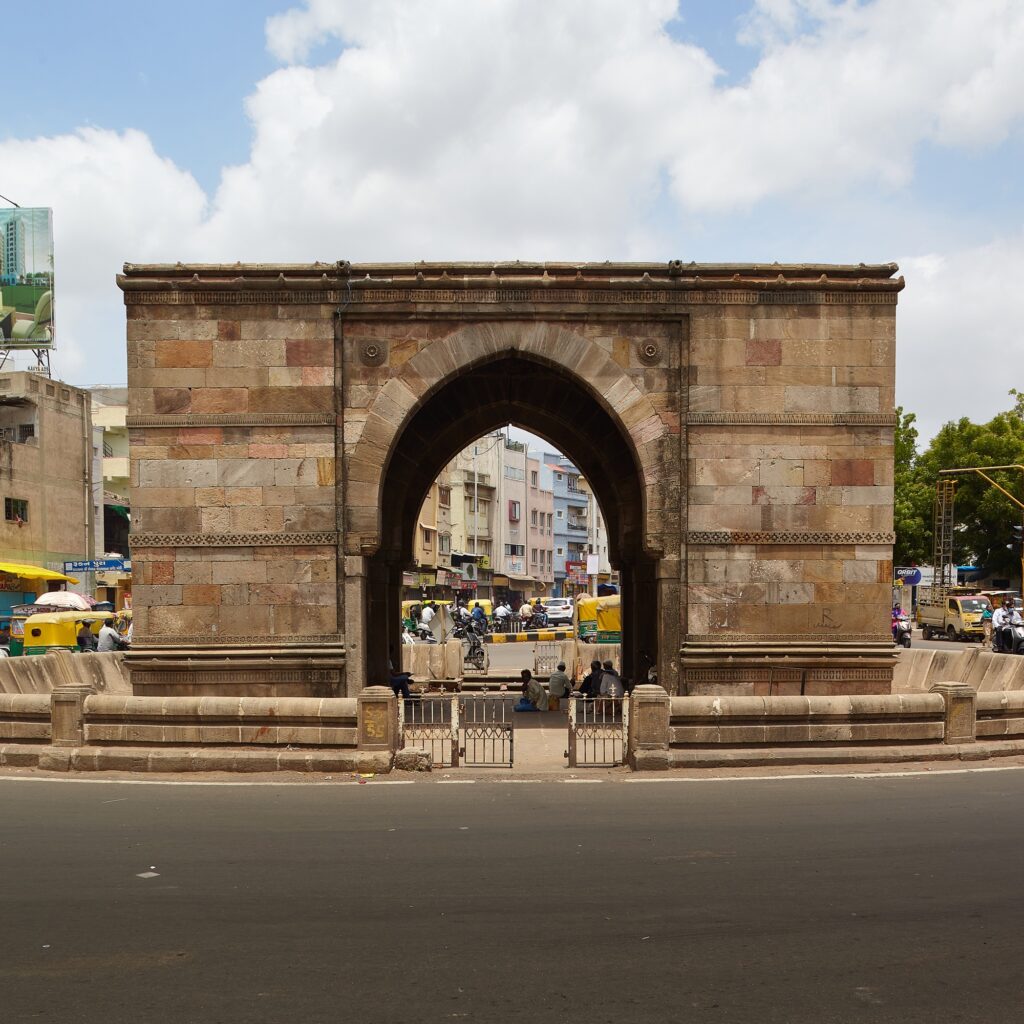
This gate was the southeastern gate of the walled city and part of the second fort that was completed by Sultan Mahmud Begada. Architecturally, it has a detail worth looking up. The gate is made from dressed ashlar stone, meaning the stones were cut and finished to create a uniform surface. It is also decorated with lotus medallions, giving the otherwise defensive structure a decorative flourish. Today, Astodia looks different from how a medieval traveller would have encountered it. The gateway sits like a traffic island on a busy main road. Nearby are historic neighbourhoods including Dhal-ni-Pol and Ashabhil-no-Tekro. That contrast is what makes Astodia interesting. Medieval masonry now has to coexist with traffic, shops and the daily rush of Ahmedabad.
Where: Swami Vivekananda Road, Old City, Gita Mandir, Khadia
6. Jamalpur Darwaza
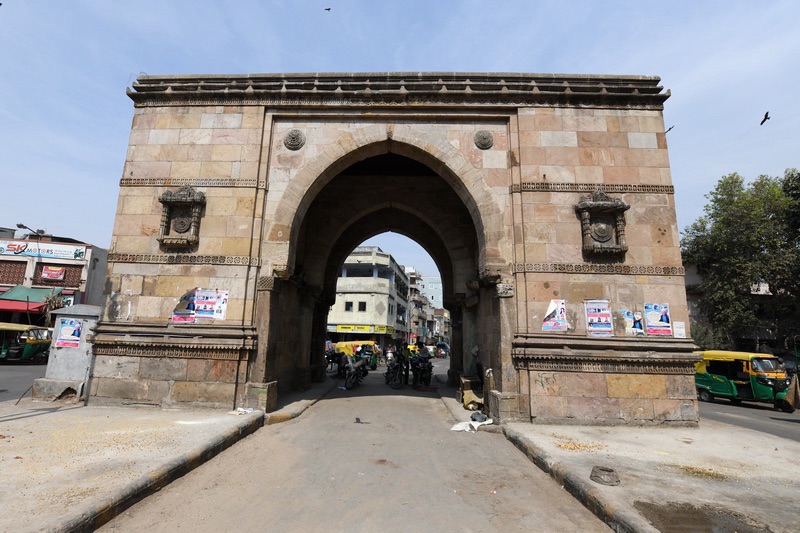
Jamalpur Darwaza was one of the southern gateways of Ahmedabad’s expanded fortification. Its name is linked to Malik Jamaluddin, a noble associated with Sultan Mahmud Begada’s court. The surrounding area was once described as a wooded settlement outside the main city. Historical records describe a three-arched gateway with a substantial platform above it, reflecting the military requirements of the period. Today, Jamalpur has a very different personality. The area is closely associated with the Jagannath Temple, whose annual Rath Yatra has become one of Ahmedabad’s major public events. The neighbourhood is also known for its flower market. So, from a wooded suburb outside the fortified city to one of its busy commercial districts, Jamalpur has had quite the evolution.
Where: Jamalpur Circle
7. Panchkuva Darwaza

Panchkuva Darwaza belongs to a much later chapter of Ahmedabad’s history. Unlike the older Sultanate gates, it was constructed in 1871 during the British period. Ahmedabad’s railway link with Bombay opened in 1864, creating a need for easier access between the walled city and the railway station. “Panchkuva” literally means five wells. The gate has three pointed-arch openings. The central entrance is considerably larger than the two side openings, reflecting its role in handling movement through this busy part of the city. The older gates were primarily part of a defensive system. Panchkuva was built when mobility and commerce were becoming equally important.
Where: Gandhi Road, Old City, Laxmi Bazar, Khadia
8. Prem Darwaza
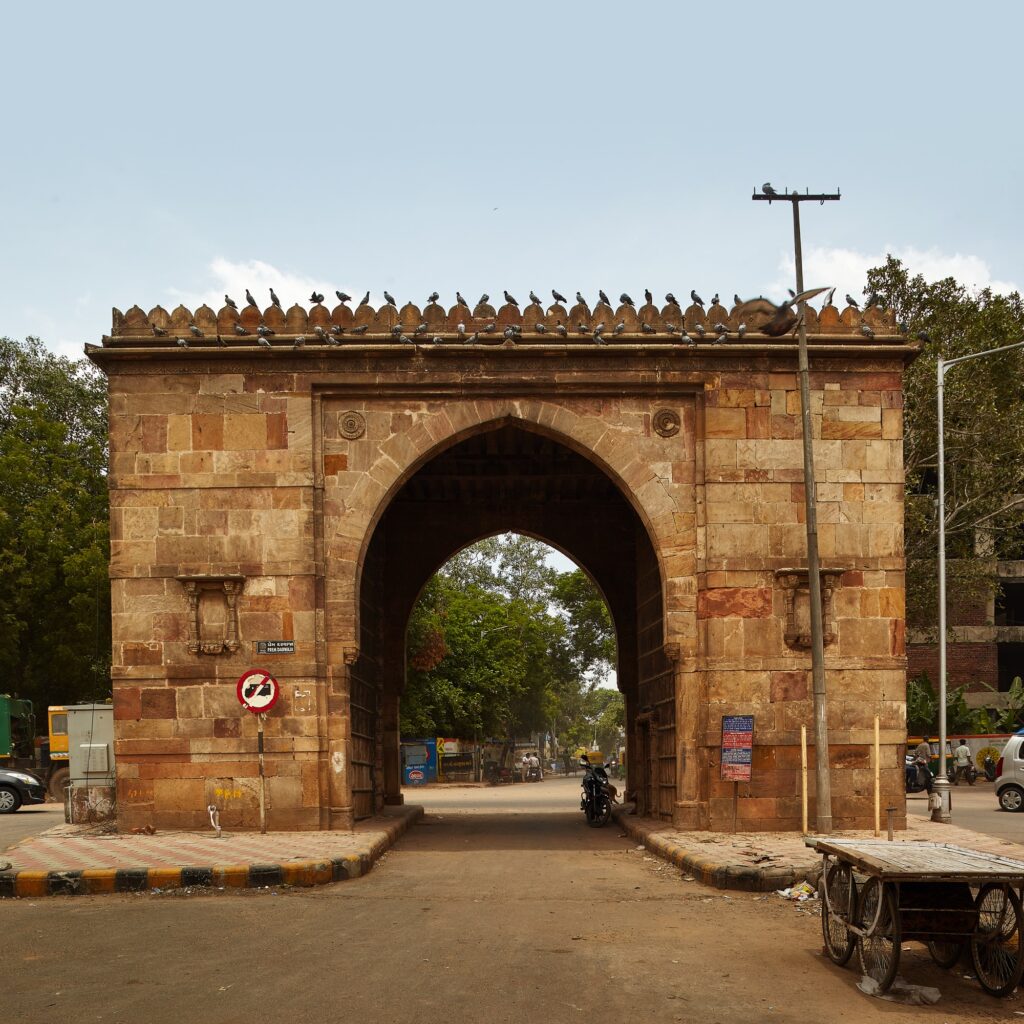
Prem Darwaza was another British-era addition, built in 1864, specifically to facilitate public movement towards the railway station. The gate is interesting because its existence is directly tied to a technological change. The railway arrived, movement patterns changed, and the old city needed new openings. Today, Prem Darwaza leads into markets including Lati Bazaar and Jordan Road, making it another example of a gateway that has shifted from military infrastructure to commercial landmark.
Where: Near Lati Bazaar and Jordan Road