



Mumbai has taken a step towards becoming a more walkable city with the launch of its first pedestrian-only cultural district. Officials inaugurated the Kala Ghoda Art Avenue at 10:30 am on Tuesday, unveiling a revamped public space where, at least on weekends, pedestrians take priority over vehicles.
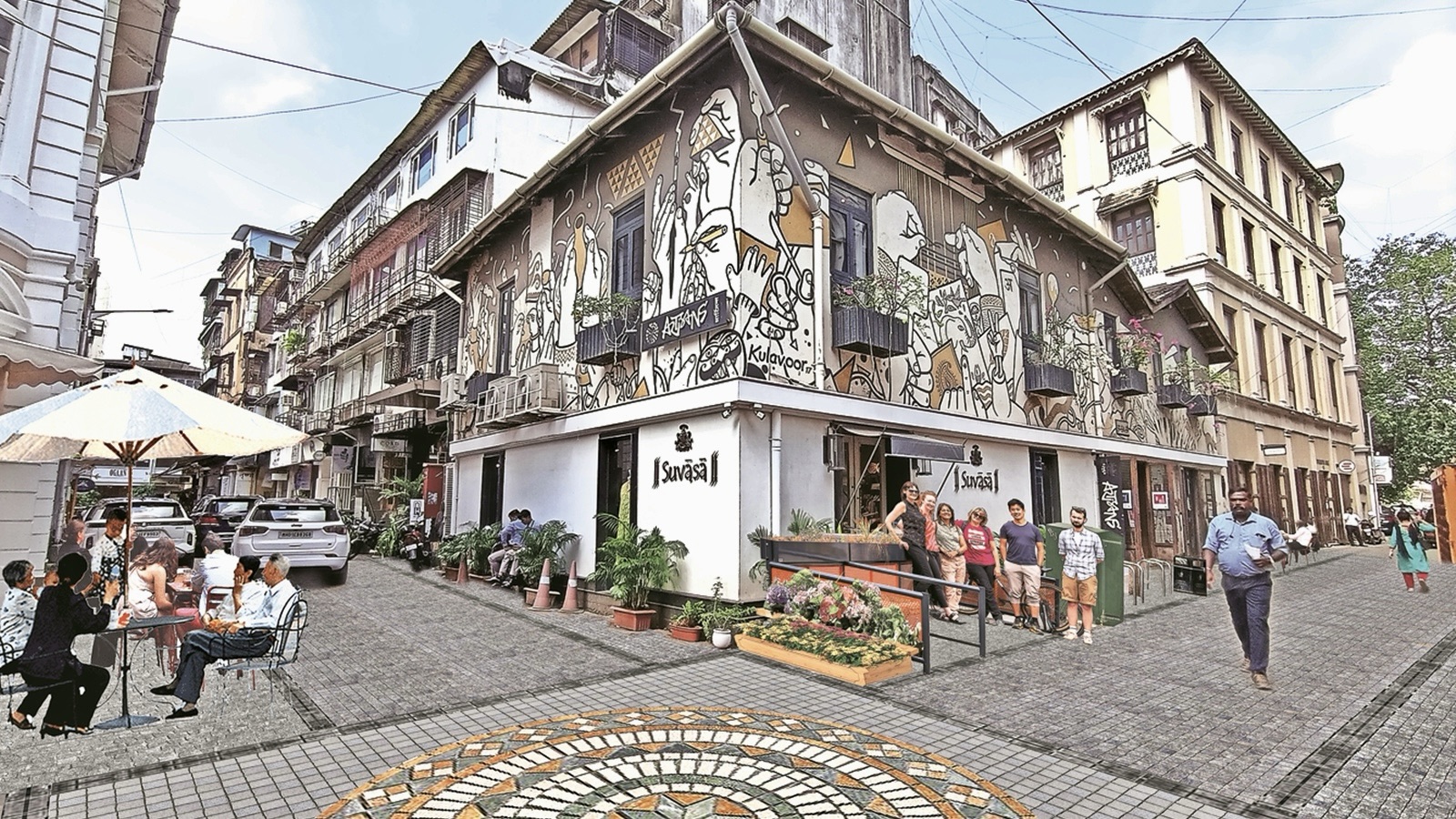
BMC’s Kala Ghoda project transforms five streets in the city’s heritage precinct into a people-first destination featuring cobbled walkways, public art, murals and open-air café seating. Every Saturday and Sunday from 6 pm to midnight, the area will be free of cars, autos and bikes, allowing visitors to explore Kala Ghoda on foot.
What has changed in Kala Ghoda
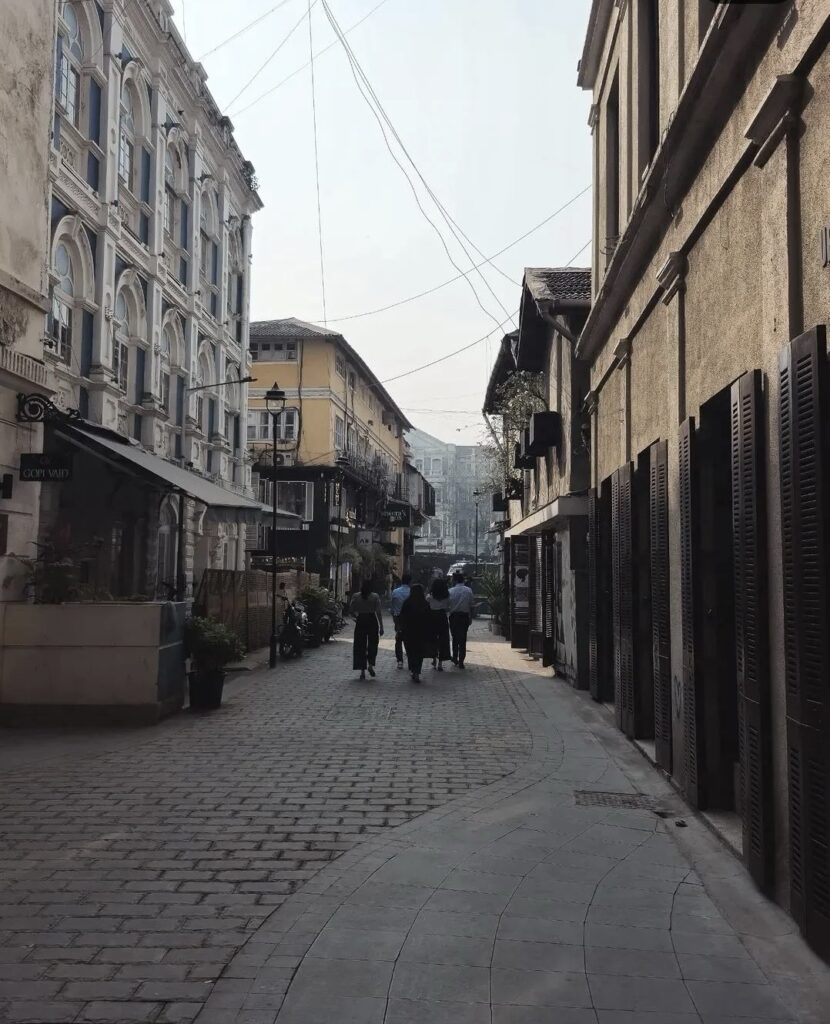
As part of the first phase of the Kala Ghoda redevelopment, BMC has upgraded around 3,443 square metres of streetscape across 500 metres. The makeover covers five roads:
- Dr V B Gandhi Marg (Forbes Street)
- Rope Walk Lane
- Saibaba Marg
- Rutherford Street
- B Bharucha Marg
Old asphalt roads have been replaced with granite and basalt paving, while landscaped walkways, decorative lighting and a pedestrian plaza at B Bharucha Marg have been introduced. Cafés and restaurants now spill out into designated open-air seating areas, creating a more pedestrian-friendly streetscape.
The precinct has also been given an artistic facelift, with colourful murals, street art and four sculptures created by artists from Sir J J School of Art. Bollards installed at entry points ensure that vehicles stay out during pedestrian-only hours.
Inspired by Europe’s walkable atreets
Kala Ghoda Art Avenue draws inspiration from well-known pedestrian shopping streets such as Buchanan Street in Glasgow and Carnaby Street in London, where public spaces are designed around people rather than traffic.
According to the civic body, the redevelopment has been planned to complement the precinct’s historic architecture while making it easier and safer for residents and tourists to walk through one of Mumbai’s most visited cultural neighbourhoods.
The long-term goal is to eventually make the pedestrian-only street in Mumbai operational throughout the week, instead of restricting vehicle-free hours to weekends.
What’s Next for the Project
The redevelopment will continue with a second phase that includes an underground parking facility for 150 to 200 cars and a new public plaza outside the former Rhythm House building on K Dubash Road.
Officials also credited local businesses for supporting the project, expressing confidence that the upgraded Kala Ghoda cultural district will become an even bigger attraction for visitors exploring South Mumbai.
Why Kala Ghoda matters
Few neighbourhoods capture Mumbai’s cultural identity quite like Kala Ghoda in Mumbai. The precinct is home to landmarks including Jehangir Art Gallery, the National Gallery of Modern Art (NGMA), Chhatrapati Shivaji Maharaj Vastu Sangrahalaya (CSMVS), the David Sassoon Library, along with independent galleries, boutiques and cafés.
Located next to Mumbai’s UNESCO World Heritage precinct, Kala Ghoda also hosts the Kala Ghoda Art Festival, recognised as Asia’s largest street arts festival, every February.
The neighbourhood gets its name from a black equestrian statue of King Edward VII, installed in 1879 and later relocated to Byculla Zoo. In 2017, a riderless sculpture titled Spirit of Kala Ghoda was installed, continuing the area’s association with public art.
With the Kala Ghoda Art Avenue now open, visitors can expect a different experience this weekend. Instead of weaving through traffic, they can stroll along stone-paved streets lined with public art, cafés and heritage buildings.